Above and below
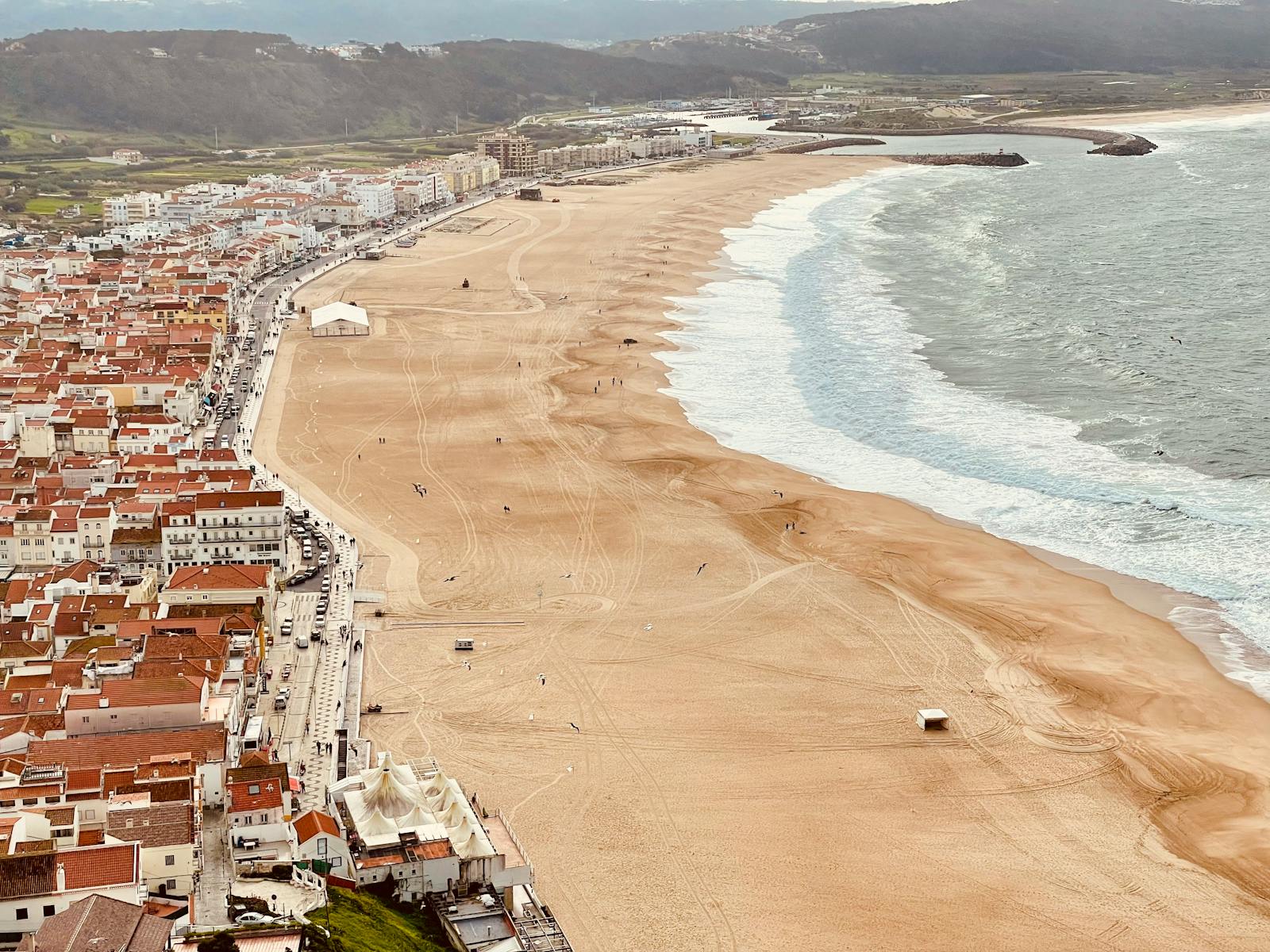
Nazaré is two places in one. The lower town — Praia — spreads along a long, broad beach backed by brightly painted houses and the smell of drying fish. The upper town — Sítio — sits on a clifftop 110 metres above, connected by a funicular that has been running since 1889. From Sítio, the view down to the beach is vertiginous: the Atlantic simply fills the horizon.
The waves
In winter, an underwater canyon offshore — the Nazaré Canyon, one of the deepest in Europe — funnels Atlantic swell into waves of extraordinary size. In 2017 and again in 2020, world records for the largest wave ever surfed were broken here, both times exceeding 24 metres. On the right winter morning, watching from the Sítio headland as surfers launch from jet skis into walls of white water is one of the most dramatic spectacles in sport.
Fishing heritage
Outside surf season, Nazaré returns to something closer to its historic self. Older women still wear the traditional seven-petticoat skirt — though opinion is divided on whether this is living tradition or performance for tourists. What is undeniable is the fish: sardines, mackerel and sea bass hung on wooden racks to dry in the salt air, and the restaurants along the promenade serving them grilled over charcoal with boiled potatoes and local wine.
The Sanctuary of Our Lady of Nazaré
The chapel at Sítio marks the site where, in 1182, a nobleman's horse stopped at the cliff edge — miraculously, it is said — preventing him from riding over it in fog. The main church beside it is a pilgrimage site, its interior heavy with ex-votos, carved models of boats and model aeroplanes left by those whose lives it supposedly saved.
Pairing with Óbidos and Alcobaça
Nazaré sits 30 minutes north of Óbidos and 20 minutes from the great Gothic abbey of Alcobaça, making this entire stretch of the Silver Coast natural territory for a well-planned day trip or overnight from Lisbon.