The museum city
Évora is classified by UNESCO as an "architectural museum" — an entire city of historic monuments contained within Roman walls that are still largely intact. Founded by Julius Caesar, it reached its peak as the favourite residence of Portugal's medieval kings, and what they built has changed remarkably little in five hundred years. Walking the old city on a quiet morning, with the Roman temple on the skyline and cobblestones underfoot, is to move through history without mediation.
The Temple of Diana
Fourteen Corinthian columns of granite and marble, standing in a row against the blue Alentejo sky — this is the image most associated with Évora, and the most immediately arresting. The temple, built in the first century AD to the imperial cult rather than Diana (that attribution is an 18th-century mistake), survived because it was incorporated into a medieval castle and later a slaughterhouse. Its columns were never dismantled, which is why it remains the best-preserved Roman temple on the Iberian peninsula.
The Cathedral and Royal Palace
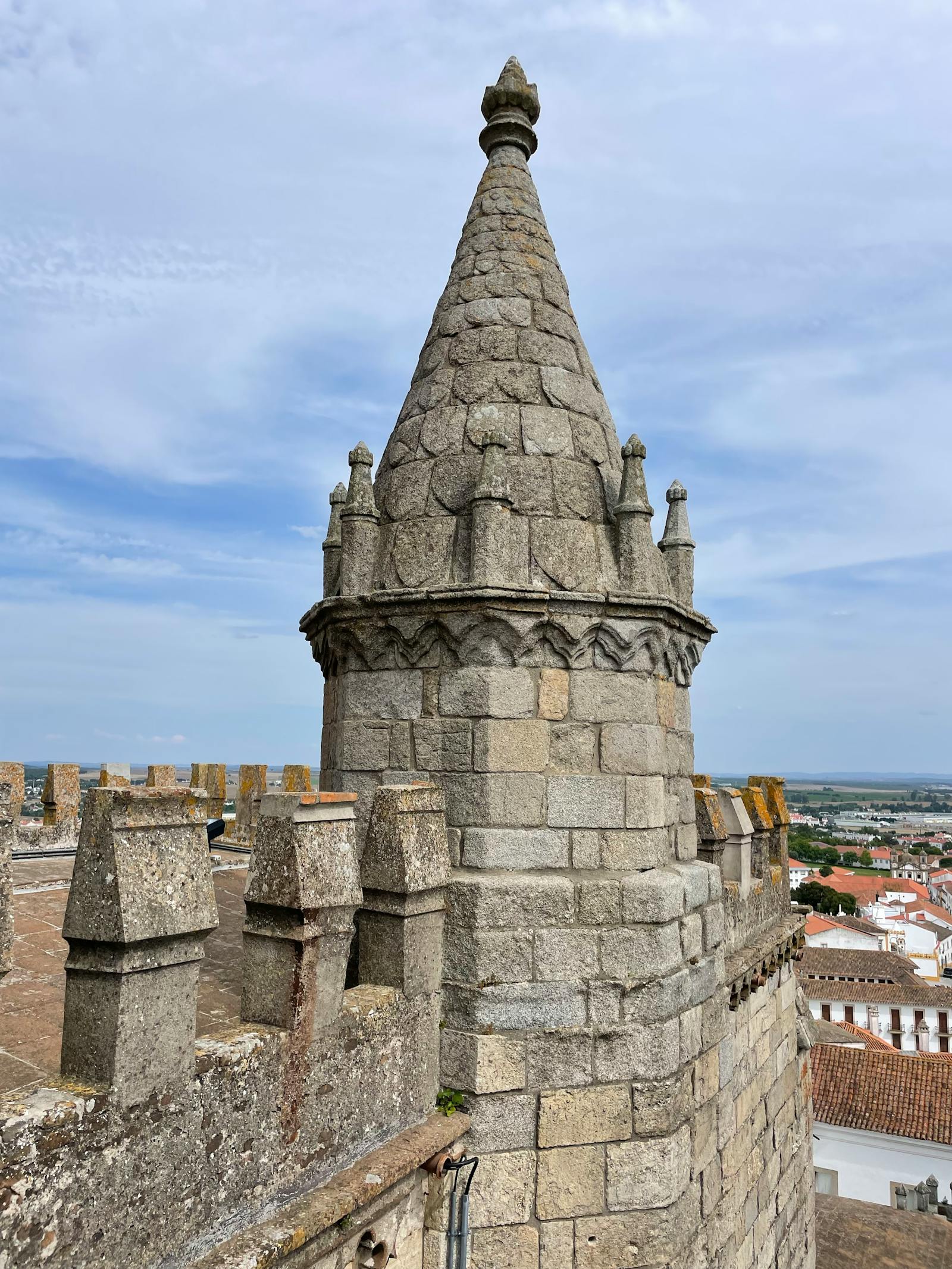
The Sé — Évora's cathedral — is a fortress-like Romanesque and Gothic structure begun in 1186. Its museum holds one of the finest collections of medieval religious art in Portugal, including an extraordinary 13th-century ivory Virgin whose torso opens to reveal miniature scenes of the Annunciation. Opposite, the former Royal Palace — where Vasco da Gama received his commission from Manuel I before sailing for India — is now the University of Évora.
The Chapel of Bones
Attached to the Church of São Francisco, the Chapel of Bones (Capela dos Ossos) was built in the 17th century by Franciscan monks who lined its walls and columns with the bones of some five thousand of their brethren. Above the entrance, an inscription reads: "We bones that are here, await yours." It is a meditation on mortality that manages to be genuinely moving rather than merely macabre.
Almendres Cromlech
Fifteen kilometres west of Évora, the Almendres Cromlech is the largest megalithic complex on the Iberian peninsula — 95 standing stones arranged in an oval, some engraved, dating from around 6000 BC. It predates Stonehenge by two thousand years and receives a fraction of the visitors. At dawn, it is entirely deserted.
Alentejo wine and food
The plains surrounding Évora produce some of Portugal's most characterful wines — bold, aromatic reds from the Alentejo DOC — alongside cork oak, olive groves, and a cuisine built on pork, bread-thickened soups (açorda) and the region's extraordinary cheeses. Lunch in a village tasca here is one of the quieter pleasures of a Portugal trip.